

How to frame a vinyl record
To frame a vinyl record with its album sleeve, decide the layout first, then build the frame to it: deep enough that the glazing never touches the record or the sleeve, with a mat cut to hold both. A standard LP is sold as a 12-inch record, in a sleeve usually about 12.375 inches (12 3/8) square; sleeves vary a little by pressing, so the frame starts from the record and the sleeve as measured.
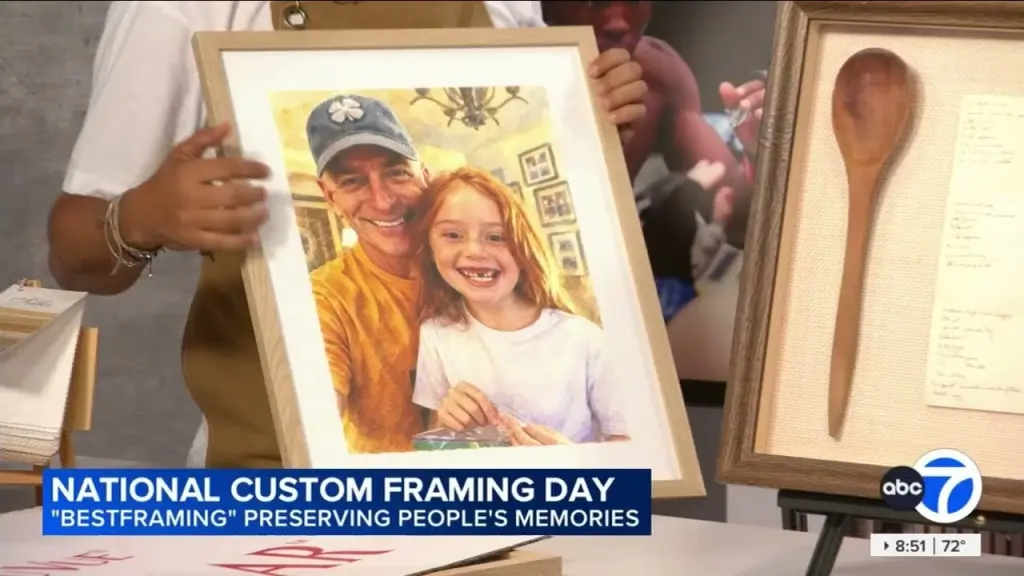
A record on a wall is usually about more than the music: the album from a first dance, a signed sleeve, the copy a parent played until it wore thin. None of it has to be valuable; it only has to mean something to someone.
What size frame do you need for vinyl?
It depends on what goes in it. It depends on what goes in it. An LP sleeve is usually about 12.375 inches square, and a frame is named for the size of what it holds, so a frame for the sleeve alone holds roughly 12.375 by 12.375 inches, measured from your own sleeve, with any mat adding its border on every side. A record and its sleeve side by side need roughly twice the width, and a gatefold sleeve opens to twice the width of a single one. Seven-inch singles and 10-inch records follow the same logic, sized to their own sleeves.
Every frame we make is cut to the piece it holds, so the layout sets the size rather than a stock frame. A common starting point for a mat border is about 2 to 3 inches on small and medium pieces and 3 to 4 inches or more on large ones; our frame and mat size guide has the rest of the numbers.
How do you frame a vinyl record with its cover?
Decide what shows, then cut the mat to it. These are the common layouts:
- The sleeve alone. The cover art is the picture, and the record stays on the shelf to be played.
- Record and sleeve side by side. Each gets its own opening, so the label shows as well as the cover.
- The record drawn halfway out of the sleeve. Disc and cover read as one piece in one opening.
- The record with its story. A ticket from the show, a photograph from the night, or the back cover with the credits.
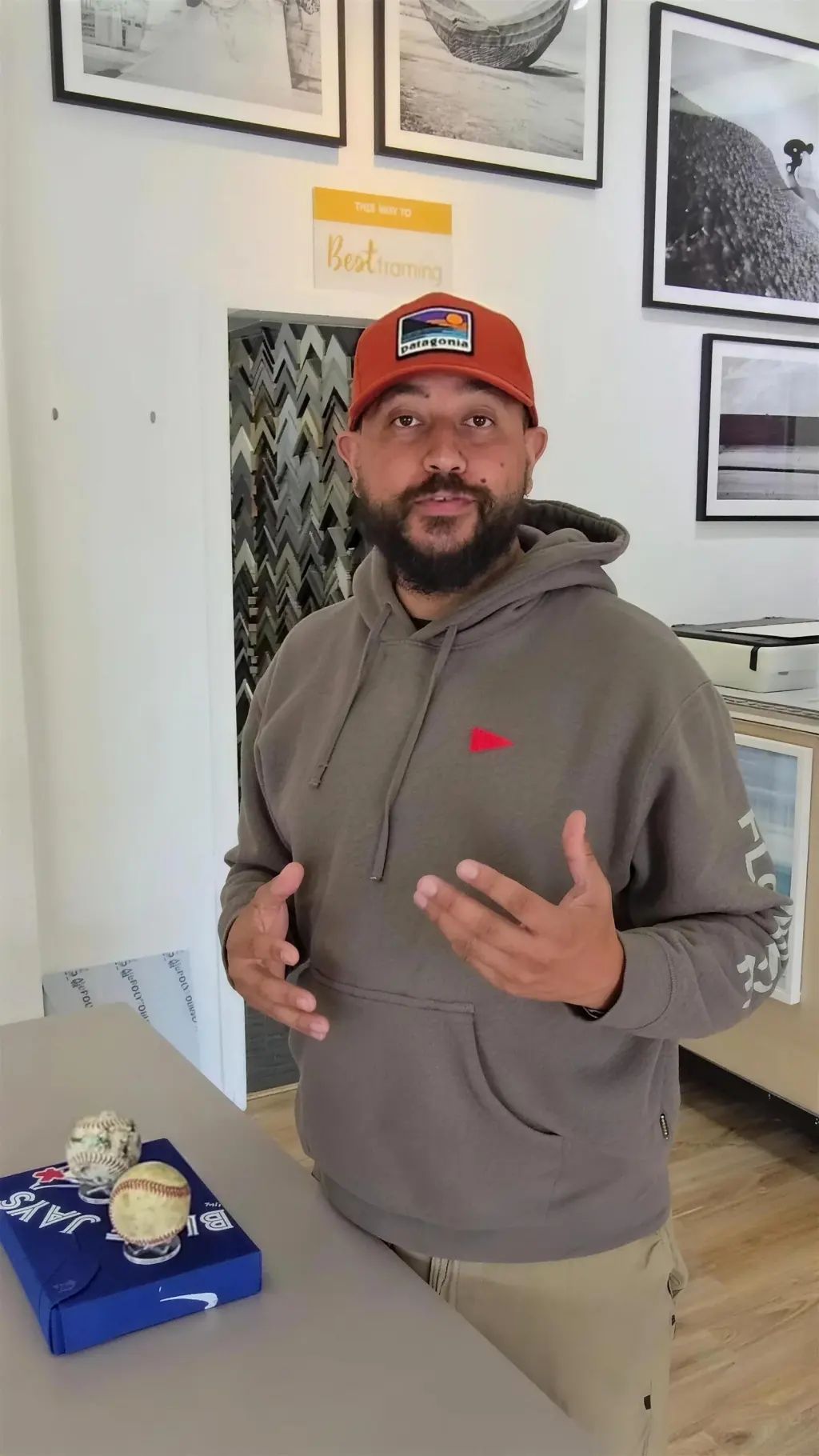
Multiple openings, lettering and shapes can all be programmed into our computerized mat cutter, so one mat can carry a square opening for the sleeve, a round one for the record and the album title beneath. Mats can be lined to the piece rather than to the room, the way a navy and gold jersey gets a navy and gold fillet.
Does a framed record need a shadow box?
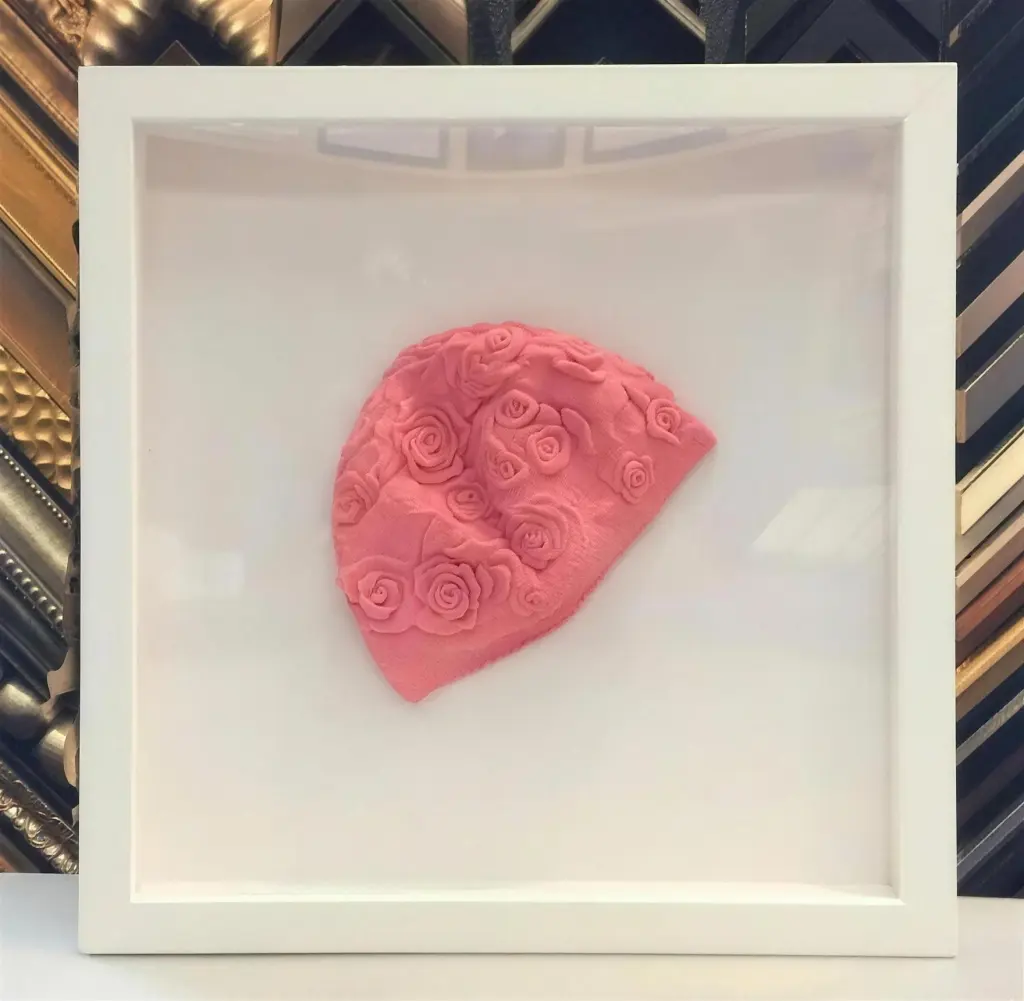
Usually, when the record goes in the frame too: a record and its sleeve are thicker than paper, and the glazing should never press on them. A shadow box is a frame with a box behind it, deep enough that the glazing never touches what is inside, so a piece is mounted inside the box rather than pressed flat like paper. The depth of a shadow box is decided with the object on the counter, because a photograph cannot show how thick it is.
In our shadow boxes, each object is supported from behind in a way that can be undone, because gluing memorabilia down can permanently alter it. If you might want to play the record again one day, say so, and ask at the counter how yours will be held. Our shadow box framing page shows how other objects are built.
Which glass goes over a signed sleeve?
Museum-quality or UV-protective glazing, chosen with you for the piece, for a signed sleeve or a pressing you cannot replace. Daylight fades color slowly and unevenly, and regular clear glass keeps dust and fingers off but does not slow that fading. Not everything needs the full build, and we will say so.
A signed sleeve can have its mat opening cut to keep the signature in view. Our store is completely acid-free, mats included, so nothing behind the sleeve burns a brown line into it over the years. Our guide to museum glass vs regular glass explains the difference.
How do you frame a vinyl record on a wall?
Pick a wall out of direct sun and away from heat, then hang the frame on hardware rated for its weight. Vinyl can warp in heat and daylight fades the sleeve, so a wall that takes afternoon sun or sits above a heater is the wrong one. A light frame can go on a picture hook rated for the weight, on drywall; a medium or heavy one wants D-rings on the back and screws into a stud or anchors rated for the load. Hang it with its center about 57 to 60 inches from the floor.
For a row of records, keep every mat the same width so every frame lines up with the one beside it. How to hang art covers grids and spacing, and our crew delivers and installs art in and around Orange County, with delivery quoted separately.
Bring the record and the sleeve to the counter
Walk in to 1671 Placentia Avenue, Costa Mesa, Monday to Friday 10am to 5pm or Saturday 9am to 1pm, with the record, the sleeve and anything you want in the frame with them. No appointment is needed. It is quoted in person once we have seen it, and there is no price list: the size, the moulding, the mats, the glazing and the mount are what change the quote. For a Christmas gift, December 15 is our last drop-off date for orders to be completed before Christmas.
Call us at (949) 791-8780, or send the quote form with a photo and the measurements. A business framing records for its own walls, a shop, a studio or a venue, can open a Pro Account.