
Museum glass vs regular glass, and what the glass over your art is doing
The difference between museum glass and regular glass is what each one does about light. Regular clear glass keeps dust and fingers off the piece; museum-quality and UV-protective glazing is there to slow the fading that daylight causes. Framing has two jobs. One is to make the piece look like it belongs on your wall. The other is to keep it from aging badly, and that job is done almost entirely by things you do not look at: the mat, the mounting and the glazing.
Acid-free is not an upgrade here
The store is completely acid-free. That is not a line on a price list, it is the material the work is built from. Acid in a mat or a backing board is what burns a brown line into the edge of a print over a few years, and it is not reversible once it has happened.
What the UV coating is for
Daylight fades pigment. Not quickly, and not evenly, which is why it is easy to miss until you take a piece down and see the border it was covering. Museum-quality and UV-protective glazing is chosen with you for the piece, and it is the difference between a room that is good for a photograph and a room that is quietly costing you one.
Conservation framing, when it matters
Fine-art and conservation framing means acid-free materials throughout, and a build that can be taken apart again without damage. It is the right call for a limited edition, a watercolor, an original photograph, or anything that is not replaceable.
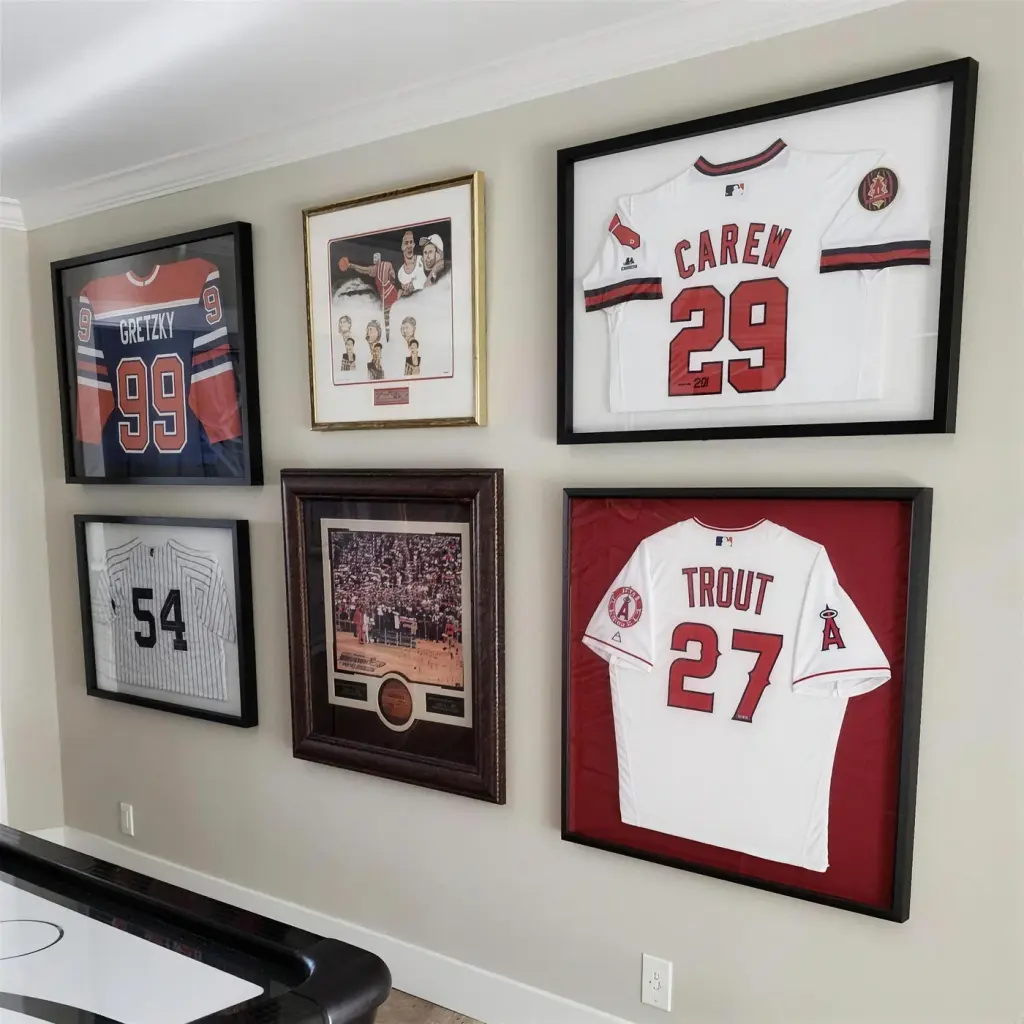
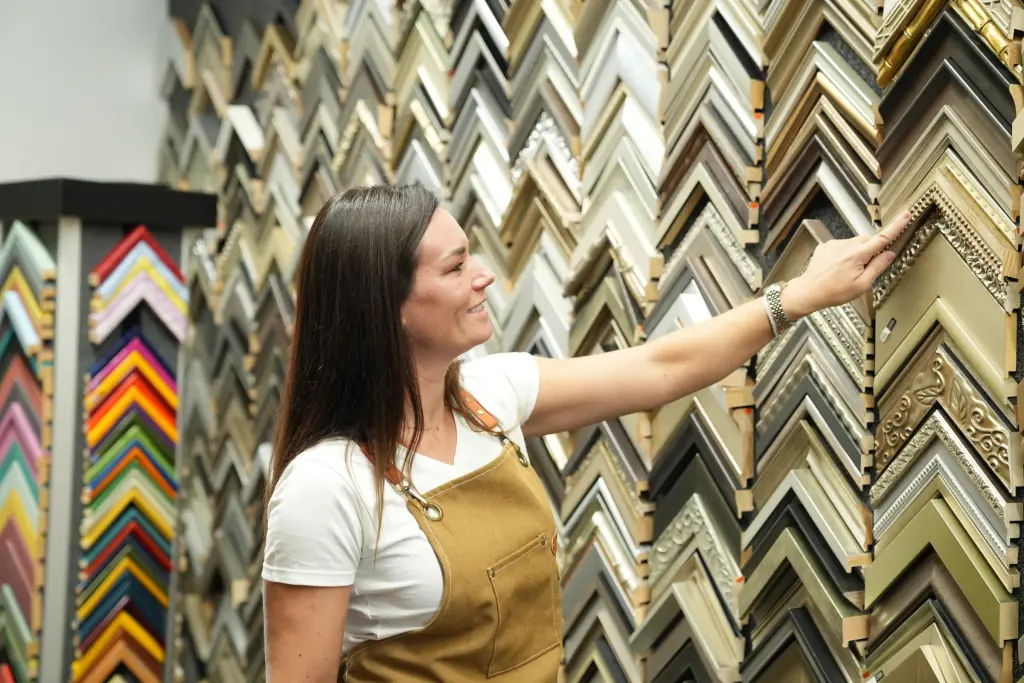
It is not the right call for everything. A poster for a games room does not need the same build as a signed lithograph, and we will say so. The point of designing it at the counter is that you see the options against your own piece and decide what it is worth.
Everything here is specially ordered and cut to size, so the materials are chosen once. That is the reason to ask the question before the frame is built rather than after.