

The framing glossary.
Best Framing designs and builds custom frames in Costa Mesa, Orange County, and these are the words you will hear at our design counter, from moulding and mat to fillet, float mount and giclée, each defined plainly.
What are the parts of a picture frame called?
A picture frame is built in layers: the moulding around the outside, the glazing over the front, a mat around the art, the art itself mounted to a backing, and hardware on the back to hang it. These are the words for each layer, defined the way we use them at our counter on Placentia Avenue in Costa Mesa.
- Moulding
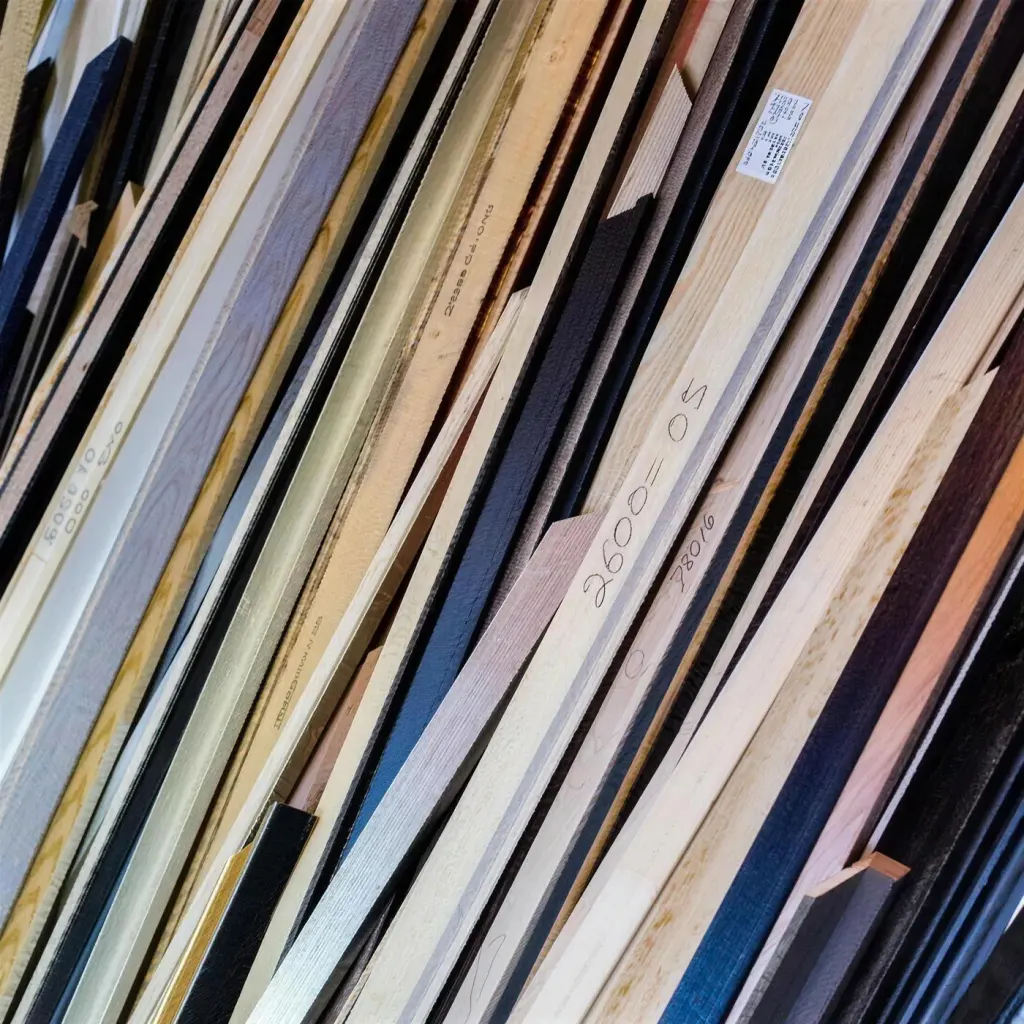
- The shaped length of wood or metal a frame is cut from. When no catalog carries the profile or the finish, we mill one in our own wood shop.
- Profile
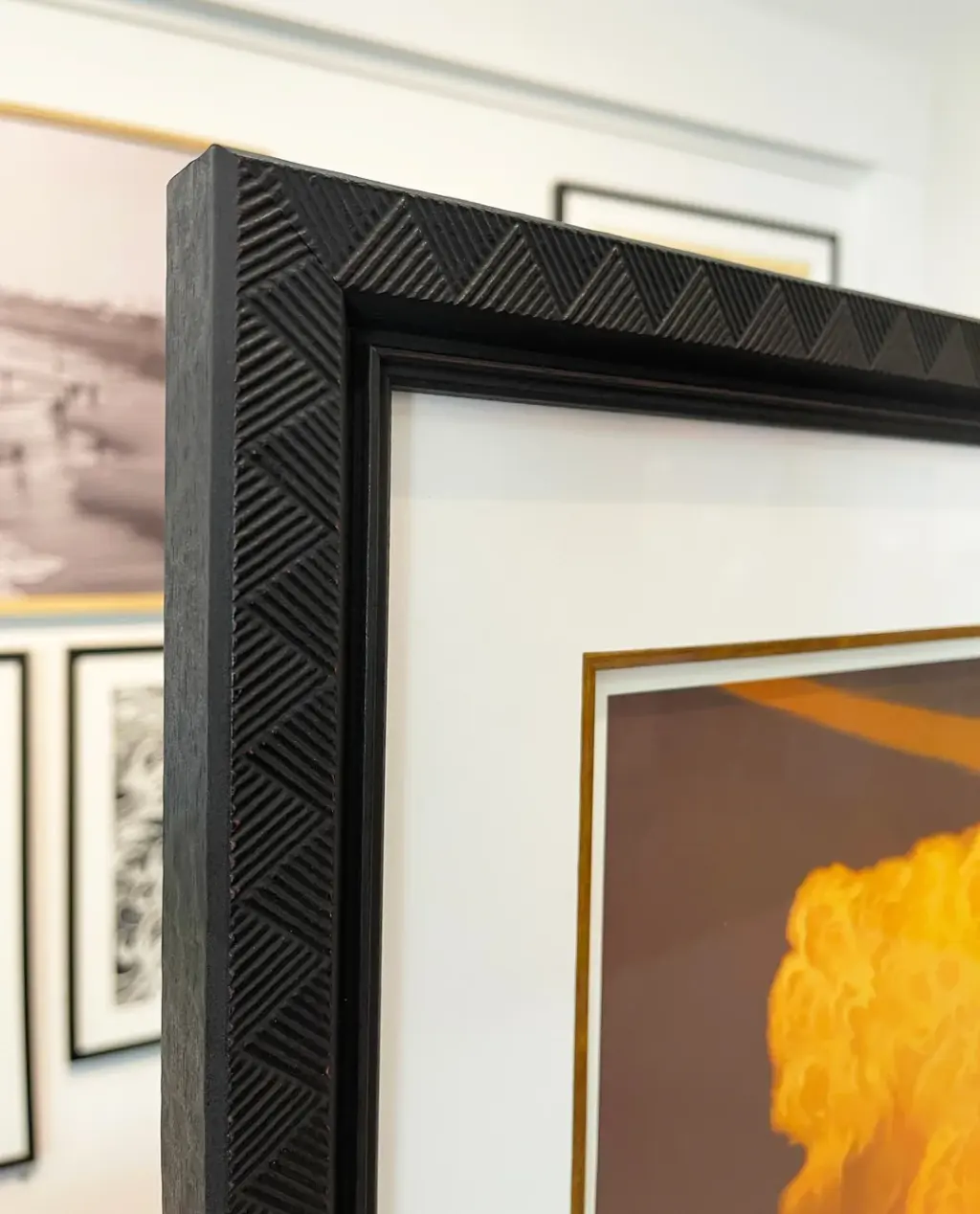
- The shape of a moulding seen from its end: flat, rounded, stepped or carved.
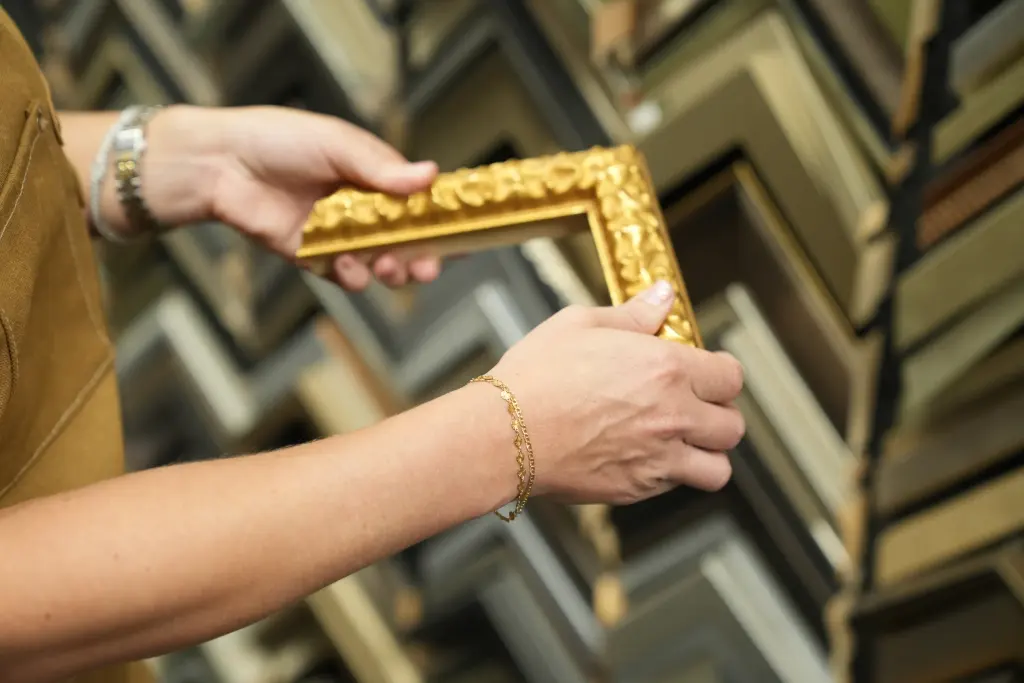
- Corner sample
- A short mitered corner of a moulding, held against the art to see the frame before it is built. Ours are hand numbered and taken off the wall at the counter.
- Rabbet
- The recessed lip along the inside back edge of a moulding, where the glazing, mat, art and backing sit. Its depth decides how thick a package the frame can hold.
- Miter
- The 45-degree cut at each corner of a frame. A frame is judged at the join: the miter should close, with the profile running through it without a break.
- Chop and join
- Cutting the moulding to length at the miters, then joining the corners. Ours are chopped and joined by hand on the production floor.
- Float frame
- A frame for a stretched canvas that leaves a narrow shadow gap around it instead of covering its edge, so the canvas reads as an object sitting inside the frame. Also called a floater.
- Shadow box
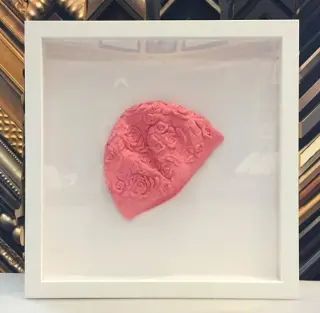
- A frame with a box behind it, deep enough that the glazing never touches what is inside. Used for jerseys, textiles and objects.
- Stretcher bars
- The wooden frame a canvas is pulled tight over. We stretch canvas in house.
- Gilt
- A finish of thin metal leaf laid over the moulding: the traditional gold frame.
What is a mat, and what can be cut into it?
A mat is the board border between the art and the frame. It keeps the art off the glazing and gives it room on the wall, and every mat we cut is acid-free.
- Mat board
- The board a mat is cut from. Ours is kept flat in the drawers of the mat room.
- Bevel
- The angled cut edge of a mat opening, which shows as a fine line around the art.
- Double mat
- Two mats stacked, the lower one cut slightly larger so a line of it shows.
- Reveal
- In a double mat, the line of the lower mat that shows around the top one.
- Fillet
- A thin strip of moulding set inside the frame or the mat, often gold, or a color taken from the piece. A navy and gold jersey gets a navy and gold fillet.
- Multiple openings
- Several windows cut in one mat. Openings, lettering and shapes are programmed into our computerised mat cutter.
- Fabric mat
- A mat covered in fabric rather than paper. We offer paper or fabric matting.
- Acid-free
- Made without the acids that yellow paper and burn a brown line into the edge of a print. Our store is completely acid-free, mats included.
High quality materials. High quality workmanship. All the joints and mats are lined perfectly.
How is a piece held inside the frame?
By its mount. The mount decides whether the piece lies flat, floats, or keeps its shape, and whether it can be taken out again later without damage.
- Dry mount
- Paper bonded to a board with heat in a press, so waves and crinkles flatten out. We dry mount to acid-free foamcore. It is generally permanent, so it is decided piece by piece.
- Canvas, fabric and cool mount
- Other ways of mounting to a board: a canvas or a fabric bonded flat, or a mount made without heat.
- Float mount
- Art set on top of a mat or a backing rather than behind a window, so its edges show. Used for ragged paper edges, invitations, textiles and garments.
- Hinge mount
- Art hung from small hinges along its top edge, so it can move with the seasons and be removed later.
- Object mount
- An object supported from behind so it keeps its shape, in a way that can be undone. Gluing memorabilia down can permanently alter it.
- Conservation framing
- Acid-free materials throughout, and a build that can be taken apart again without damage. The right call for anything that is not replaceable.
What is glazing, and which kind does a piece need?
Glazing is the clear layer over the front of a frame. Which kind a piece needs depends on how much light it will get and how irreplaceable it is, which is why museum-quality and UV-protective glazing are chosen with you for the piece.
- Glazing
- The clear sheet over the front of the frame.
- UV-protective glazing
- Glazing that filters the ultraviolet light that fades pigment.
- Museum-quality glazing
- Glazing chosen to protect the art while keeping it clearly visible. Museum glass usually pairs UV filtering with an anti-reflective coating.
- Spacer
- A thin strip that holds the glazing away from the art, so the two never touch.
- Mirror bevel
- An angled, polished edge on a mirror that catches the light. Without one the glass reads flatter and more modern. Our mirrors are a quarter inch thick, with or without a bevel.
What is on the back of a finished frame?
The backing that holds the art flat, the points that close the frame, the paper that keeps dust out, and the hardware it hangs from. Our designers walk you through the mounting hardware when the frame is designed.
- Foamcore
- A light, rigid board used to back and mount art. Ours is acid-free.
- Backing paper
- The paper sealed across the back of a finished frame to keep out dust.
- Points
- Small metal tabs driven into the inside of the moulding to hold the glazing, mat, art and backing in place. A point driver sets them when the frame is closed up.
- D-rings and wire
- Hanging hardware on the back of the frame: two D-rings, with or without a wire between them.
- French cleat
- Two interlocking strips cut at an angle, one on the wall and one on the frame, that carry a heavy piece or a mirror along their whole length.
- Custom wood crate
- A crate built in house for large pieces, multiple-piece orders or long distances, shipped on our freight accounts.
What do the printing words mean?
They describe how a print is made and what it is made on. Our print lab is on the same floor as the framing, so these words come up at the same counter.
- Giclée
- A fine-art inkjet print on archival paper or canvas. Ours are printed with archival pigment inks. More on giclée prints.
- Archival
- Made to resist yellowing and breaking down over time. All of our giclée materials are archival.
- dpi
- Dots per inch, the resolution of a scan or a print. Our flatbed scans at up to 600 dpi.
- RIP station
- The computer that prepares a file for the printer. Ours is where every file is prepared, proofed and color-matched before anything is printed.
- Proof
- A test print checked before an edition is printed.
- Edition
- The set of prints made from one image: open, with no fixed number, or limited to a stated number, each print signed and numbered.
- Gallery wrap
- A canvas stretched around its bars and hung without a frame.
- UV printing
- Printing straight onto a flat material, such as acrylic, wood or aluminum, with ink cured by ultraviolet light. Our flatbed prints up to 60 by 96 inches.
- Dibond
- A rigid aluminum composite panel with a white face, for prints and signs. One of the materials we stock.
The questions people ask at the counter, answered.
From what can be framed and choosing the right glass to mounting jerseys, printing artwork and protecting the pieces that matter, we answer the questions our customers ask us every day.
 Museum glass vs regular glass, and what the glass over your art is doingMuseum-quality and UV-protective glazing vs regular glass: what each does for your art, plus acid-free mats and conservation framing. From Costa Mesa.Read Article
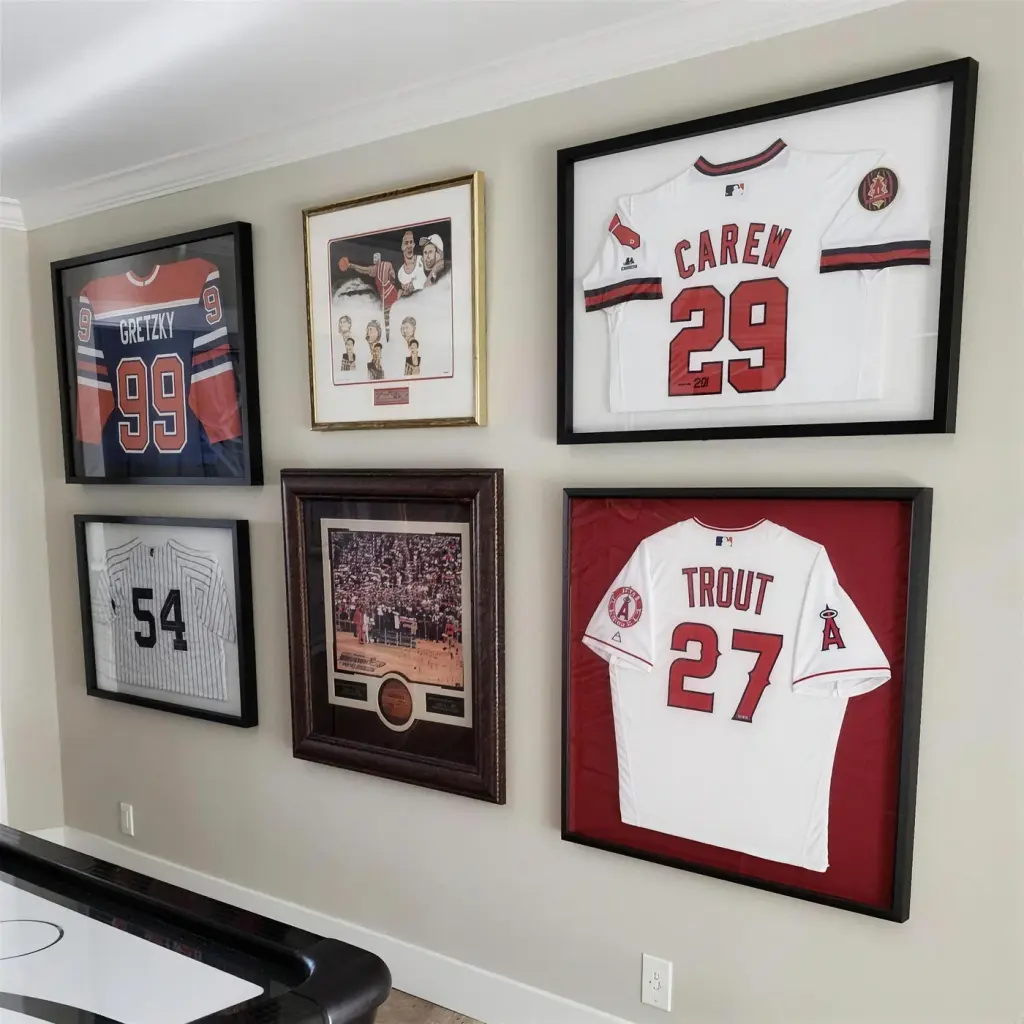 How to frame a jersey, step by stepHow to frame a jersey: a shadow box deep enough that the glass never touches it, mounting that can be undone, a mat lined to its colors. From Costa Mesa.Read Article
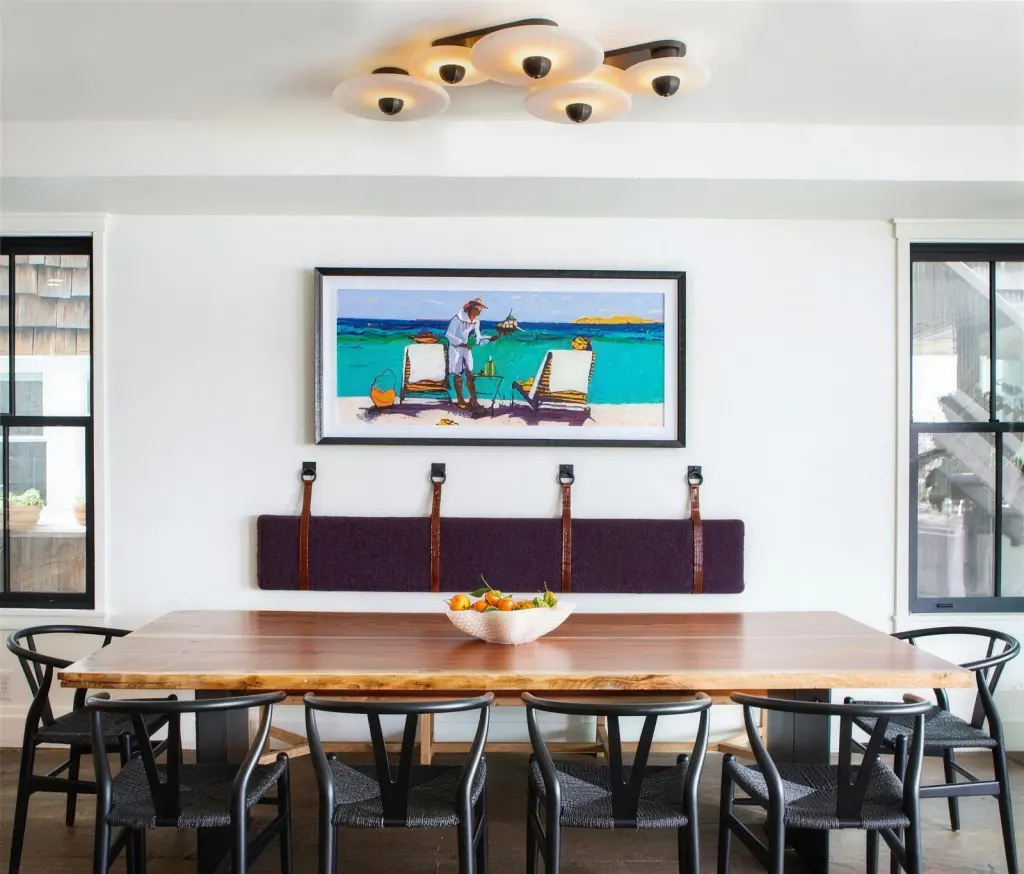 Canvas, printed and stretched in the same buildingHow a canvas print is made and framed in one building: archival giclée, stretched in house, then hung as it is or set in a float frame. From Costa Mesa.Read Article
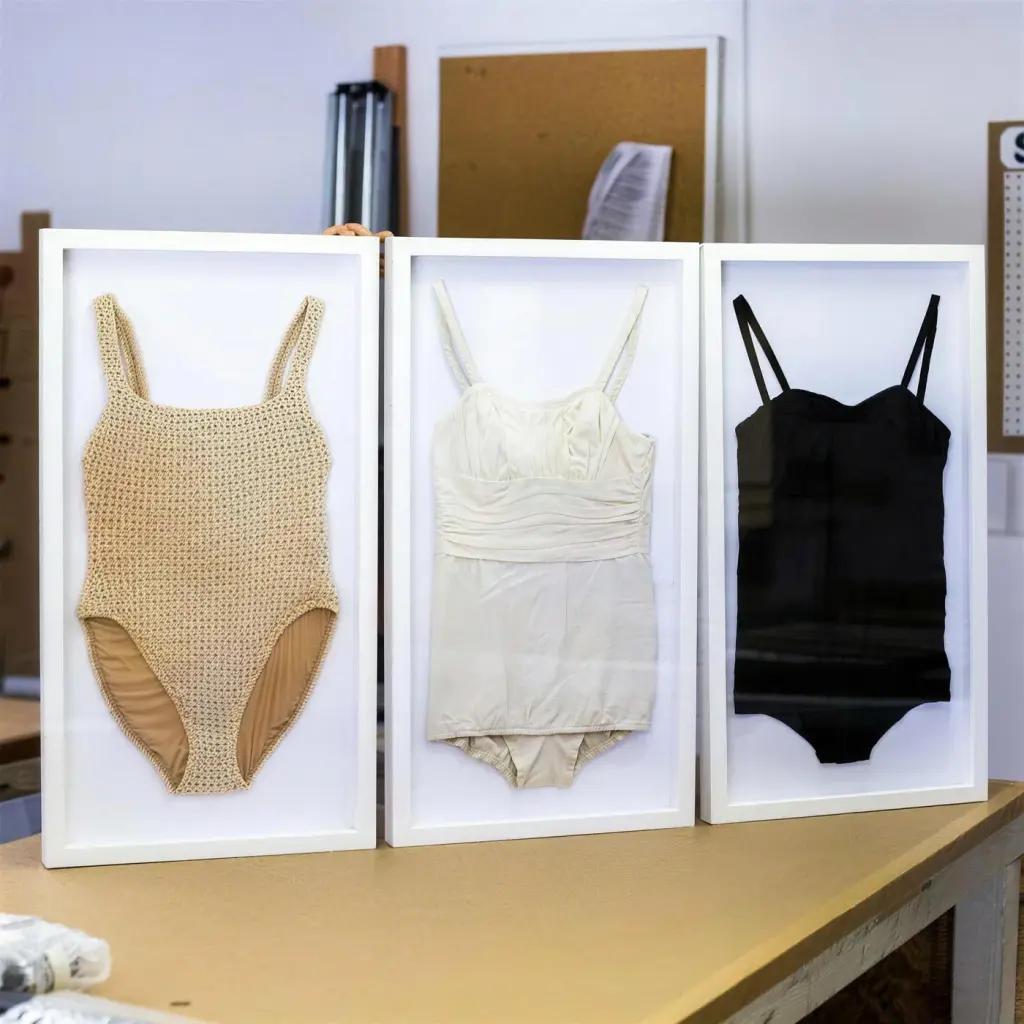 What can you actually frame?Photos, posters, diplomas, jerseys, kimonos, oversized art and mirrors: what a custom frame shop in Costa Mesa can take on, and what each one needs.Read Article
Framing words, asked at the counter.
What is a mat in framing?
The board border between the art and the frame. It keeps the art off the glazing and gives it room on the wall. Every mat we cut is acid-free, and openings, lettering and shapes can be cut into it by our computerised mat cutter.
What is a fillet?
A thin strip of moulding set inside the frame or the mat, often gold or a color taken from the piece. A navy and gold jersey gets a navy and gold fillet, so the frame reads the same colors as the shirt.
What is a float mount?
Art set on top of a mat or a backing rather than behind a window, so its edges stay visible. It suits ragged paper edges, invitations, textiles and garments.
What is the difference between a floater frame and a regular frame?
A regular frame covers the edge of the piece with its lip. A floater frame leaves a narrow shadow gap around a stretched canvas, so the canvas reads as an object sitting inside the frame rather than a picture behind one.
What does acid-free mean?
Made without the acids that yellow paper and burn a brown line into the edge of a print over a few years, damage that cannot be reversed. Our store is completely acid-free, mats included.
What is the difference between dry mounting and hinging?
Dry mounting bonds the art to a board with heat and is generally permanent. Hinging hangs the art from small hinges so it can be removed later. Conservation framing calls for a build that can be taken apart again without damage.
Still wondering? Come in and ask. No appointment required.
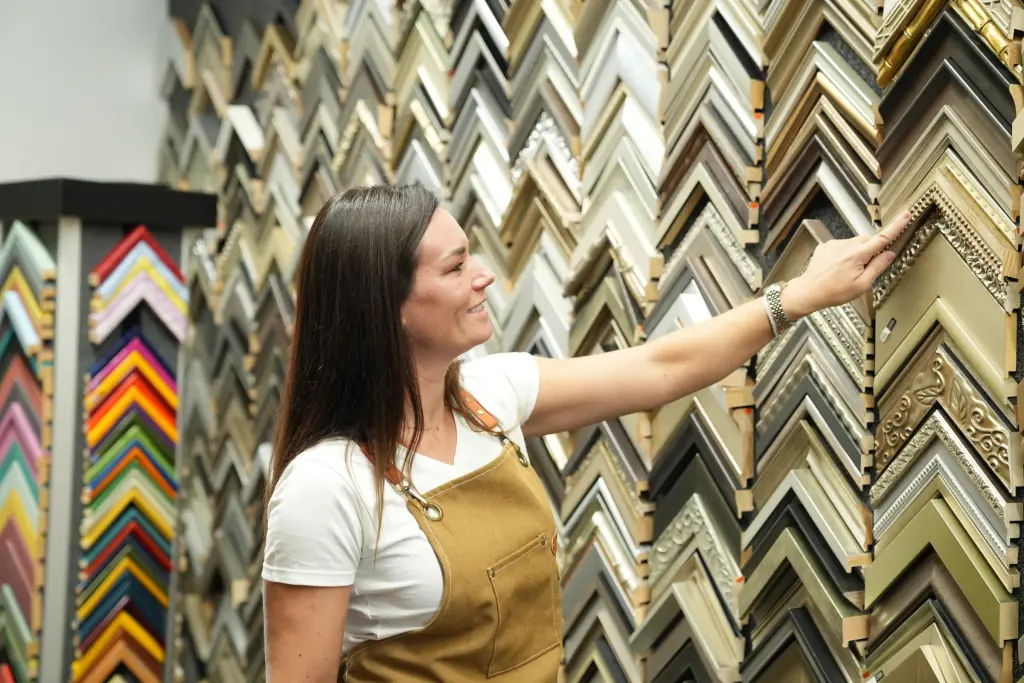
Print and frame what you love. Visit the showroom.
No appointment required.
- Call
- (949) 791-8780
- Hours
- Mon-Fri 10am-5pm
Sat 9am-1pm

Bring us the thing you love.
Walk in with it and talk it through with a designer. No appointment required, though you are welcome to book one.
1671 Placentia AvenueCosta Mesa, CA 92627
- Call(949) 791-8780
- HoursMon-Fri 10am-5pm · Sat 9am-1pm · Sun closed
- Talk to a designer nowStart a Video CallSomeone is on the floor Mon-Fri 10am-5pm and Sat 9am-1pm, Costa Mesa time
- Book an appointmentPick a time with a designerAppointments are optional. Walk-ins are welcome.