

What is a floater frame?
A floater frame covers none of the front of a canvas. The canvas is fixed from behind, and a narrow shadow gap runs between its edge and the inside of the frame, so the piece reads as an object sitting inside the frame rather than a picture behind one. The painted or wrapped edges stay visible, and the whole surface of the work is on show.
Why canvases get floater frames
A stretched canvas is already finished as it is: it has depth, edges, and no paper to protect. A traditional frame holds a picture behind a lip that covers a little of the front; a floater frame does not. Most paintings on canvas are framed without glazing, so the frame is the only thing between the painting and the room, and a floater hides none of it.
The gap and the depth
The width of the gap, the depth of the frame and its color are chosen with the canvas in front of you, because a deep gallery-wrapped canvas and a thin one need different frames. The frame has to be deeper than the stretcher bars, or the canvas stands proud of it. Our wood shop mills floaters to size, among them four at 144 by 36 inches on inch-and-a-half stretcher bars.
Wood, black, white or gilt
Natural wood and black read clean against most paintings, white all but disappears on a white wall, and a gilt floater warms a darker canvas. The choice settles quickly once a few corner samples are held against the painting at the counter.
When a floater frame is not the answer
Works on paper, photographs and anything that needs glass go into a traditional frame with a mat; see custom framing. A canvas that has to be glazed for a reason is talked through at the counter.
Printed, stretched and floated
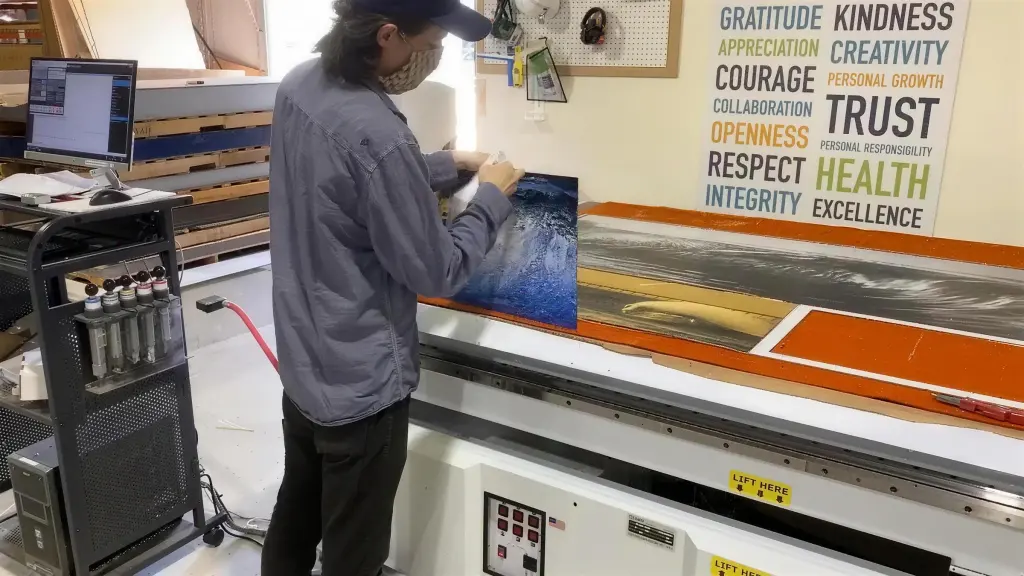
A photograph or a file can be printed as a giclée on canvas in our print lab, stretched over bars and floated in the same building: see canvas prints and canvas stretching and framing, or read how to frame a canvas print.