
How to mat and frame a print
To mat and frame a print, choose a frame one or two sizes up from the print, have the mat opening cut about half an inch smaller than the print each way so the mat overlaps every edge by a quarter inch, keep every layer acid-free, and choose the glazing by how much light the wall gets.
How much bigger should the mat be than the print?
Big enough to give the print room: go one or two frame sizes up, and cut the opening about half an inch smaller than the print each way, so the mat holds it in place. An 8 × 10 print goes in an 11 × 14 frame with an opening of about 7.5 × 9.5 inches; an 11 × 14 print goes in a 16 × 20 frame with an opening of about 10.5 × 13.5. For the border, a common starting point is 2 to 3 inches on small and medium pieces and 3 to 4 inches or more on large ones, often with the bottom a little wider than the top, so the art does not look like it is sliding down the wall. These are starting points, not rules. Our frame and mat size guide has the full chart.
How is the mat cut?
Here, by computer. A mat is the board border between the print and the frame: it keeps the art off the glazing and gives it room on the wall. The opening is cut with a bevel, the angled edge that shows as a fine line around the print. Our mats are cut on a computerized mat cutter, a Valiani Nexus Edge, from board kept flat in the drawers of our mat room, and every mat we cut is acid-free. Because the openings are programmed, one mat can hold several of them, so a set of small prints, a print with its ticket, or a photograph with a line of lettering can share a single frame. “High quality materials. High quality workmanship. All the joints and mats are lined perfectly,” Broadwillow V. of Newport Beach wrote on Yelp in March 2025.
Single mat, double mat or float mount?
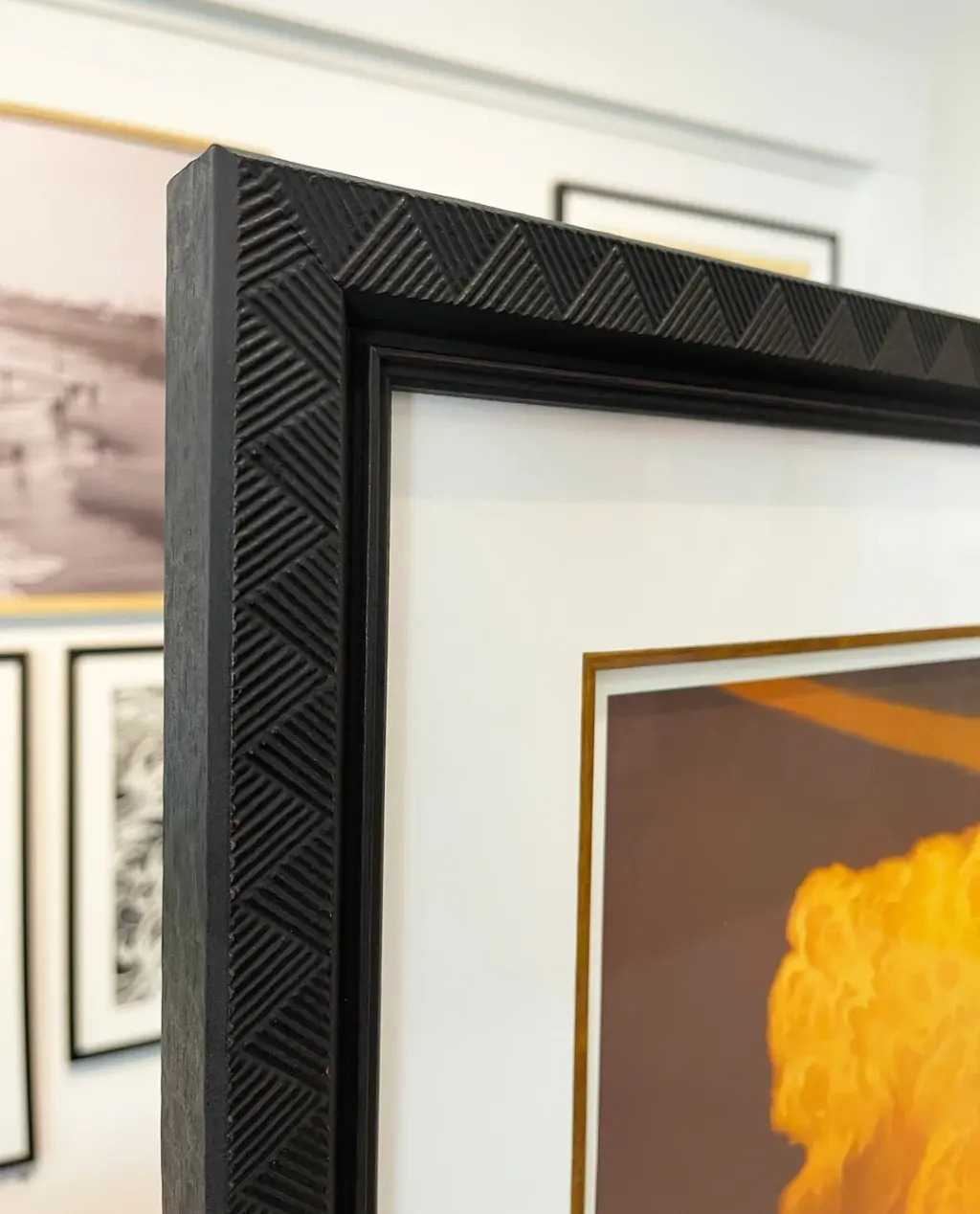
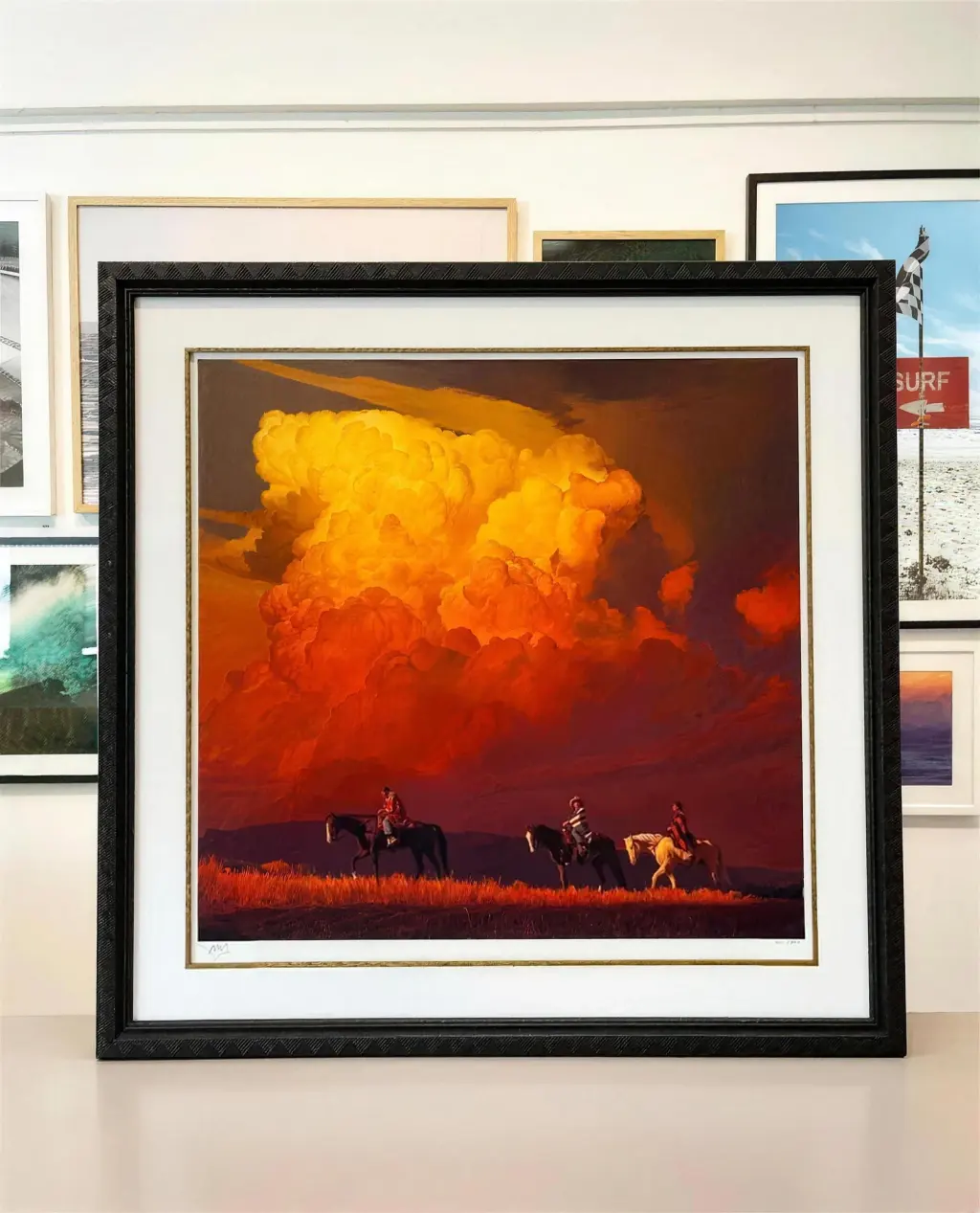
It depends on the print and how much of it you want to see. A single mat is one board around the print. A double mat stacks two, the lower one with a slightly smaller opening, so a thin line of it shows inside the top one; that line is called the reveal. A mat can also be lined in a second color, or carry a fillet, a thin strip of moulding set inside the mat, often gold, like the one on the signed print in these photographs. A float mount sets the print on top of a mat or a backing rather than behind a window, so its edges show, which suits paper with ragged edges that a window would cover. A signed print can have its opening cut to keep the signature in view. Each of these words is defined in our framing glossary.
What keeps the print safe in the frame?
The materials, the glazing and the mount. Acid in a mat or a backing board is what burns a brown line into the edge of a print over a few years, and that damage cannot be reversed, which is why our store is completely acid-free, mats included. Glazing is the clear layer over the front: regular clear glass keeps dust and fingers off, while museum-quality and UV-protective glazing slows the fading that daylight causes, and is chosen with you for the piece. The mount decides whether the print can come out again. A dry mount bonds paper to acid-free foamcore in our press and is generally permanent, so it is decided piece by piece; a hinge mount hangs the print from small hinges along its top edge, so it can be removed later. For a limited edition, a watercolor or anything else you cannot replace, the build is conservation framing: acid-free throughout, and a build that can be taken apart again without damage.
What should you ask any framer before a mat is cut?
The same four questions, wherever you go. Is the mat board acid-free? Is the opening cut to your print, or is the print fitted to a ready-made one? Which glazing is in the quote? Can the mount be undone? They apply to a big-box store, an online framer and a shop like ours alike. We can only answer for our own counter, and our guide to comparing framers sets the same build side by side.
How do you get a print matted and framed?
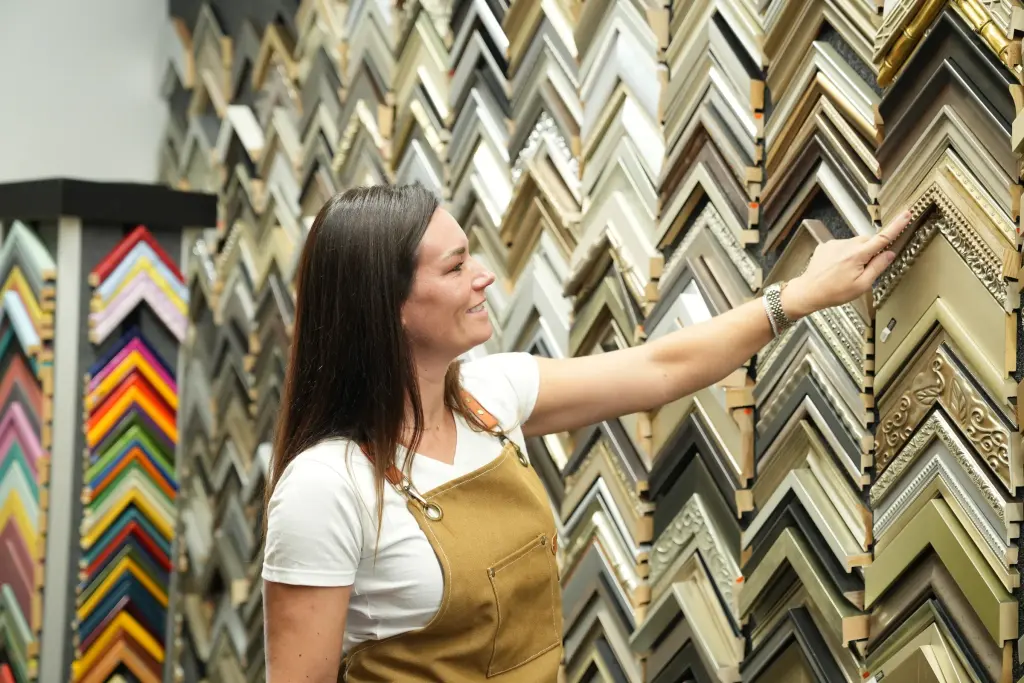
Bring it in. Every custom frame we make is cut to the piece and crafted by hand in our Costa Mesa warehouse, and the mats are chosen at the counter with the real samples held against the print, rather than picked from a screen. Walk in at 1671 Placentia Avenue, Costa Mesa, Monday to Friday 10am to 5pm or Saturday 9am to 1pm; no appointment is required. The work is quoted in person once we have seen the print. There is no price list: the size, the moulding, the mats, the glazing and the mount are what change the quote. You can also call (949) 791-8780 or send the quote form.